The slow glass
The sky over Goa was doing something I hadn't seen before.
Low, dark, moving fast, bruised purple at the edges where the light was still fighting through. The sea had gone the colour of lead. Rain was maybe ten minutes away, probably less.
I took out my 10-stop ND filter.
There was a flat-topped rock nearby, angled toward the water. I set the camera on it, checked the horizon was roughly level, and started a sixty-second exposure. The kind where you press the shutter and just stand there, watching the storm come in, doing the math on whether you'll finish before it hits.
Just about. The shutter closed as the first drops landed.
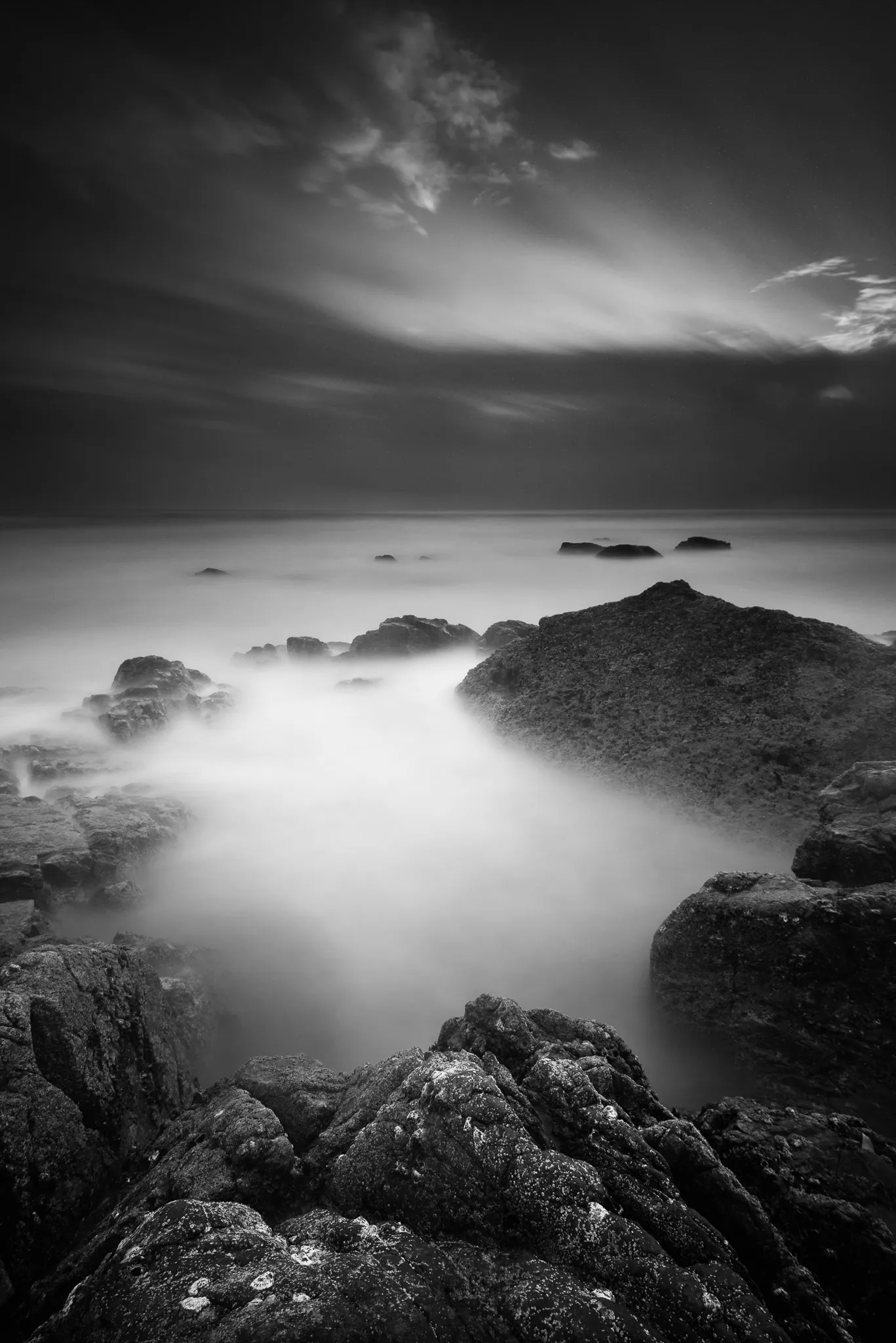
That image is one of the most dramatic things I've made. A storm that was chaotic and fast-moving, compressed into something still. Inevitable, almost. The ND filter didn't create that. It just gave me a way to hold onto it.
That's really what these filters do. They're not technical fixes, they're creative tools. They let you photograph a scene the way you experienced it, not the way the camera would've recorded it if you'd just pointed and hoped.
The 10-stop: when you want to erase time
A 10-stop filter cuts the light reaching your sensor by a factor of a thousand. An exposure that would normally run 1/30th of a second now lasts thirty seconds or more. Anything that moves in that time leaves a trace, or disappears entirely if it moves enough.
Water stops looking like water. Waves erase themselves. What's left is the structure of the scene: colour, light, the shape of land against sky, without the noise.
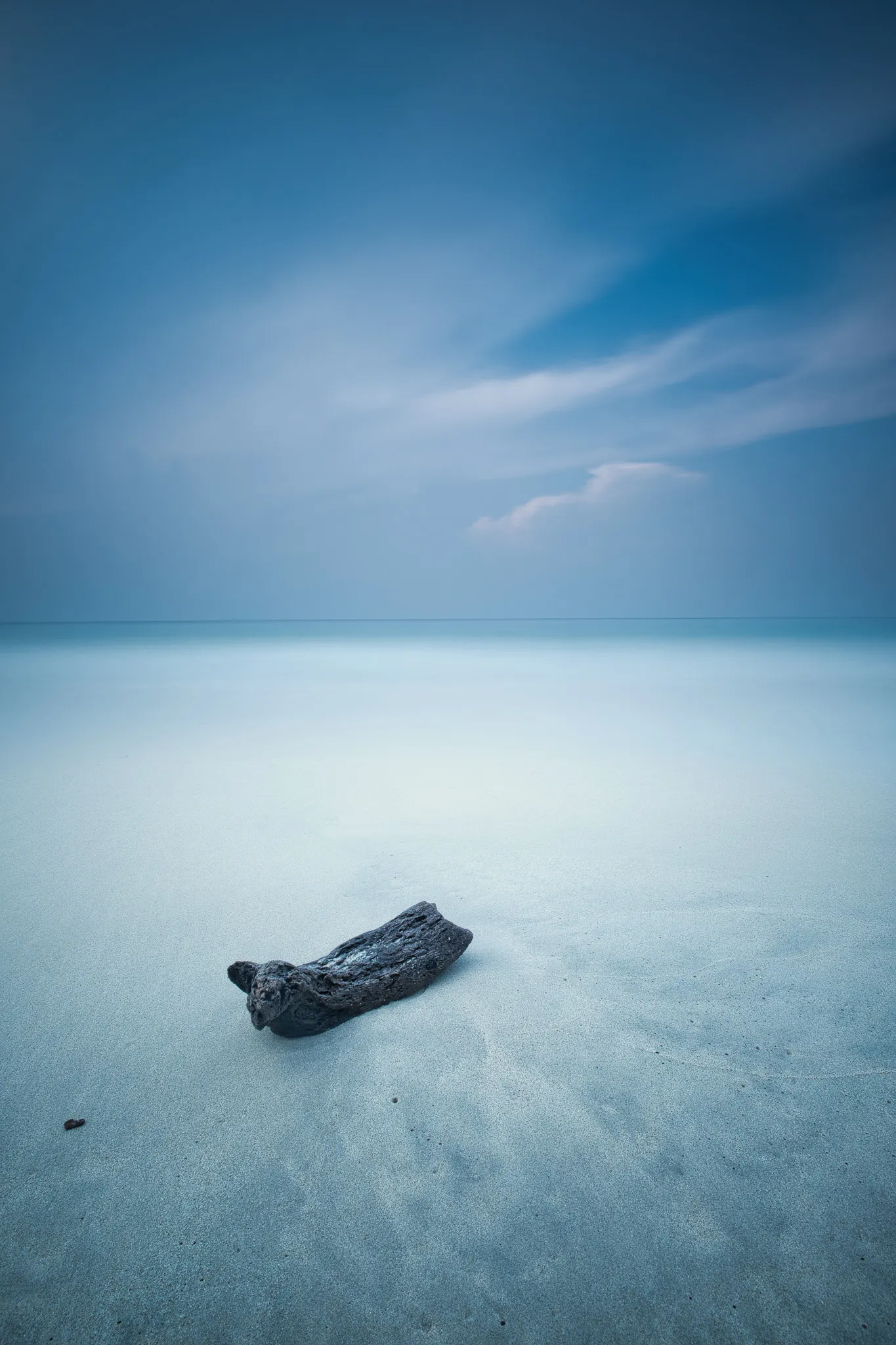
Havelock Island, in the Andamans. The water there is a colour I've never quite managed to name, somewhere between turquoise and aquamarine. I wanted that quality without the chop of the waves getting in the way. Ninety seconds, 10-stop filter. The waves flattened out into nothing. What was left was the colour, the light, the horizon.
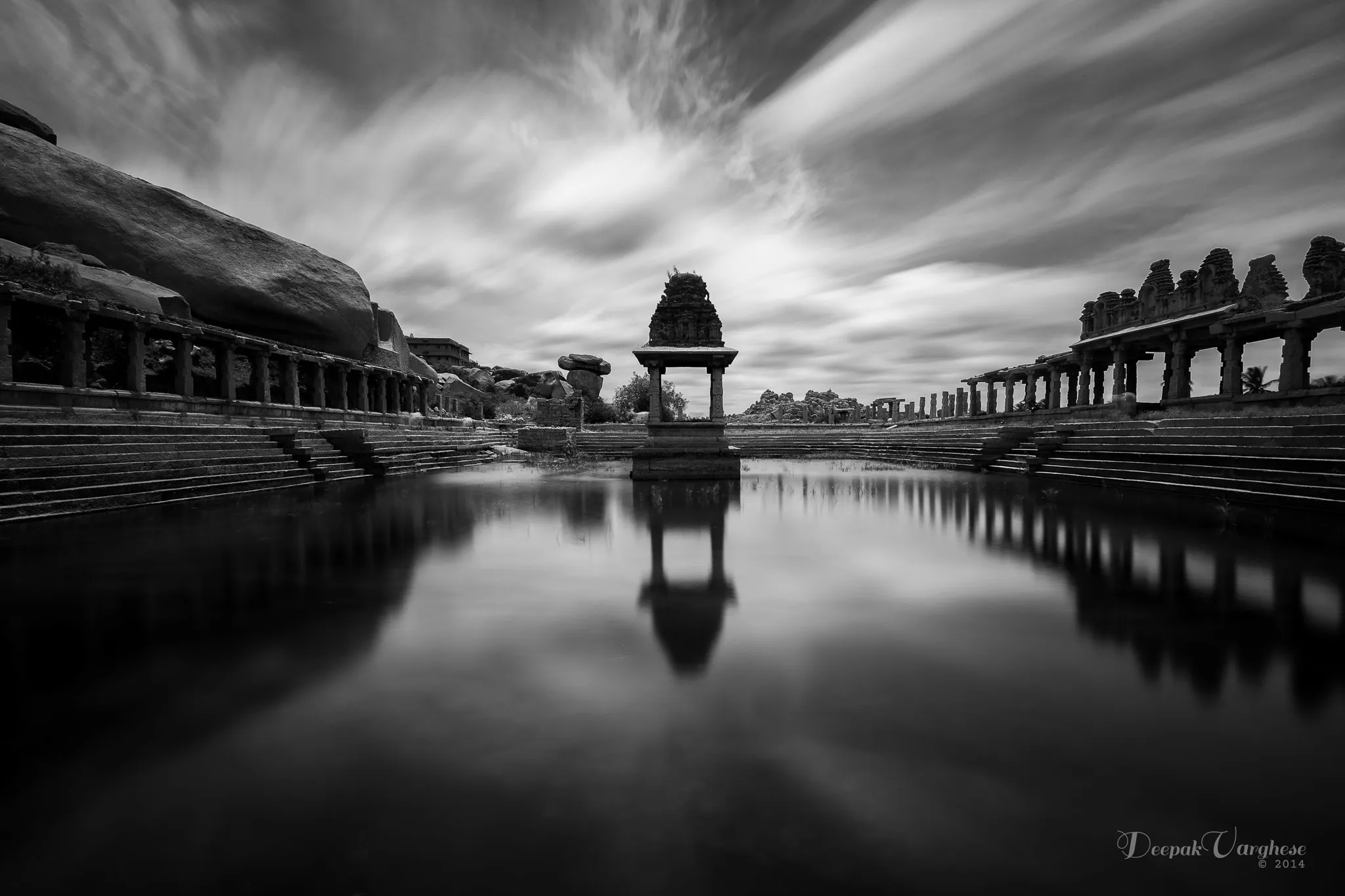
Hampi's a different kind of stillness. Boulders everywhere, ruins dissolving into the horizon, a quality of light that makes everything feel permanent. The water had ripples, the clouds were moving overhead. A sixty-second exposure compressed both into one frame. What came out wasn't exactly what I'd stood in front of. It was quieter. Closer to how the place actually felt.
The reverse ND: built for the horizon
At sunrise and sunset, the problem isn't the sky. It's the horizon.
The band where the sun meets the water is always the brightest part of the frame, and that's exactly where a standard graduated ND lets you down. A regular GND darkens the top and fades to clear at the bottom, useful when the sky is the bright thing. But at golden hour the top of the sky's manageable. It's that thin strip at the horizon that burns out first.
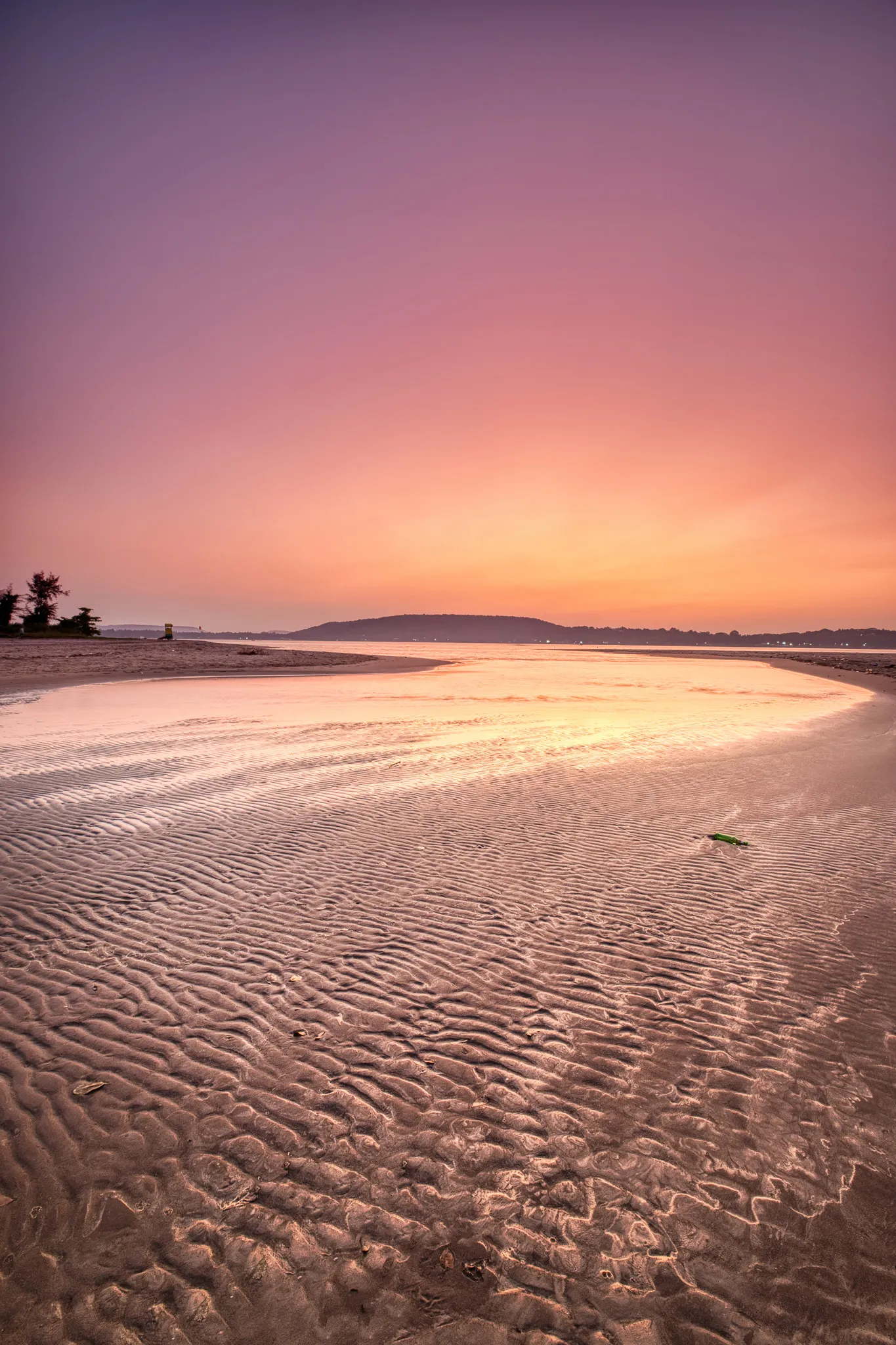
A Reverse ND is darker in the middle, lighter at the top and bottom. It targets the horizon directly. In Thailand, shooting into the light as the sun dropped toward the water, a 3-stop Reverse ND was what made the frame possible at all. The sky held detail, the water caught the colour, the horizon stayed in the shot instead of burning through it.
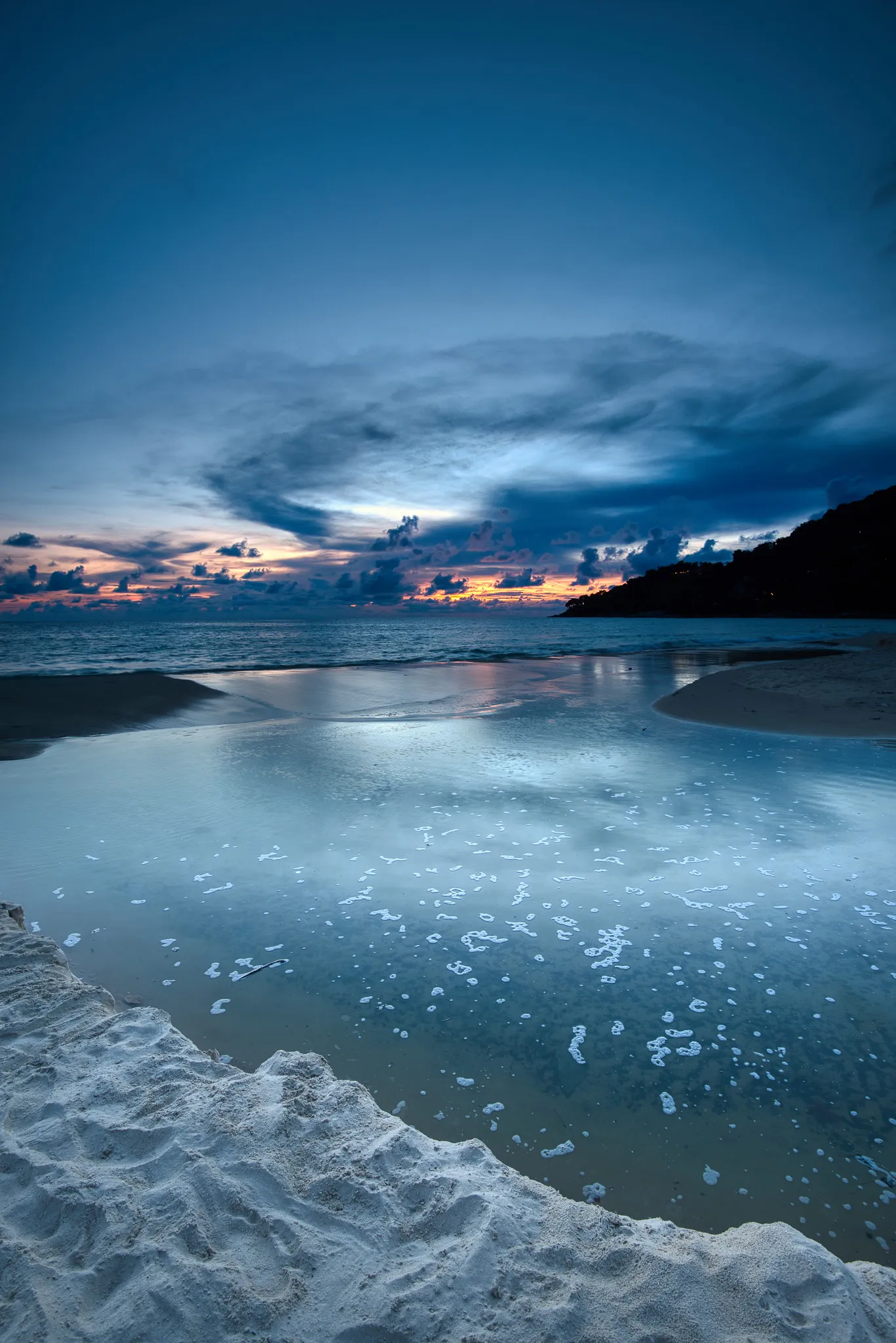
Without it I'd have spent an hour fighting a graduated brush in Lightroom, trying to rebuild something that was never properly captured to begin with. With it, I got the shot and went to dinner.
Not all movement needs to disappear
The assumption people make with ND filters is that the goal's always maximum time. Silk water, stretched clouds, the longest exposure you can manage. That's not always right.
Sometimes the movement is the story. Water going somewhere, a wave surging up a rock face. Smooth that entirely away and you lose what made the scene worth photographing in the first place.
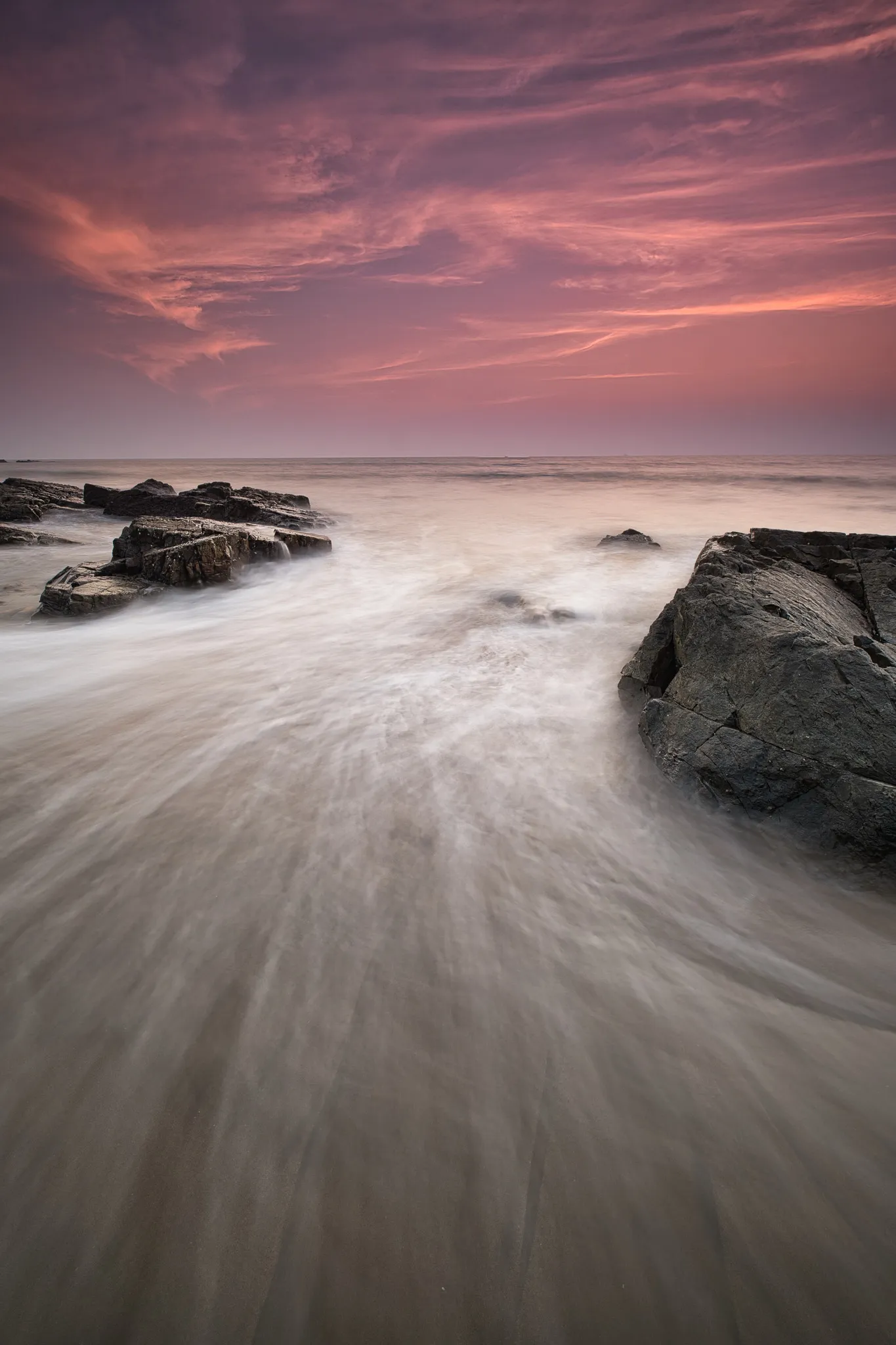
This one used a 3-stop Reverse ND, shorter than I'd normally run. Long enough to balance the sky against the foreground, short enough that the water kept its movement. Blurred, not erased. You can still read the direction of it.
The filter you reach for is really a decision about what the image should feel like. Stillness or movement, calm or energy. Decide that first, then pick your glass.
How I choose which filter
I carry three. The 10-stop for compressing time. A 3-stop Reverse ND for sunrises and sunsets, when the horizon burns out before the sky does. A standard 2-3 stop GND for when I just need to bring the sky down without doing anything dramatic to the foreground. They go in a small pouch, take up almost no space, and have changed what I come home with more than most of what's in the rest of the bag. Long exposure photography in India is where I worked out which filter I actually needed, and when.
What took me longer than it should have to understand is that none of this works unless you already know what you want the image to feel like before the filter goes on. These are creative tools, not corrective ones. You're not fixing a problem, you're making a decision about time.
I still think about that Goa frame sometimes. The storm was faster than I'd planned for. I had exactly one shot at it, and the rain got my camera bag before I got the lens cap back on.
Prints from Goa, Havelock, Hampi, and Thailand are available in the shop.