When it rains in Venice
The forecast had said rain from afternoon, heavy by evening. The kind of day that clears a tourist city out completely. I took the camera anyway, more out of habit than expectation.
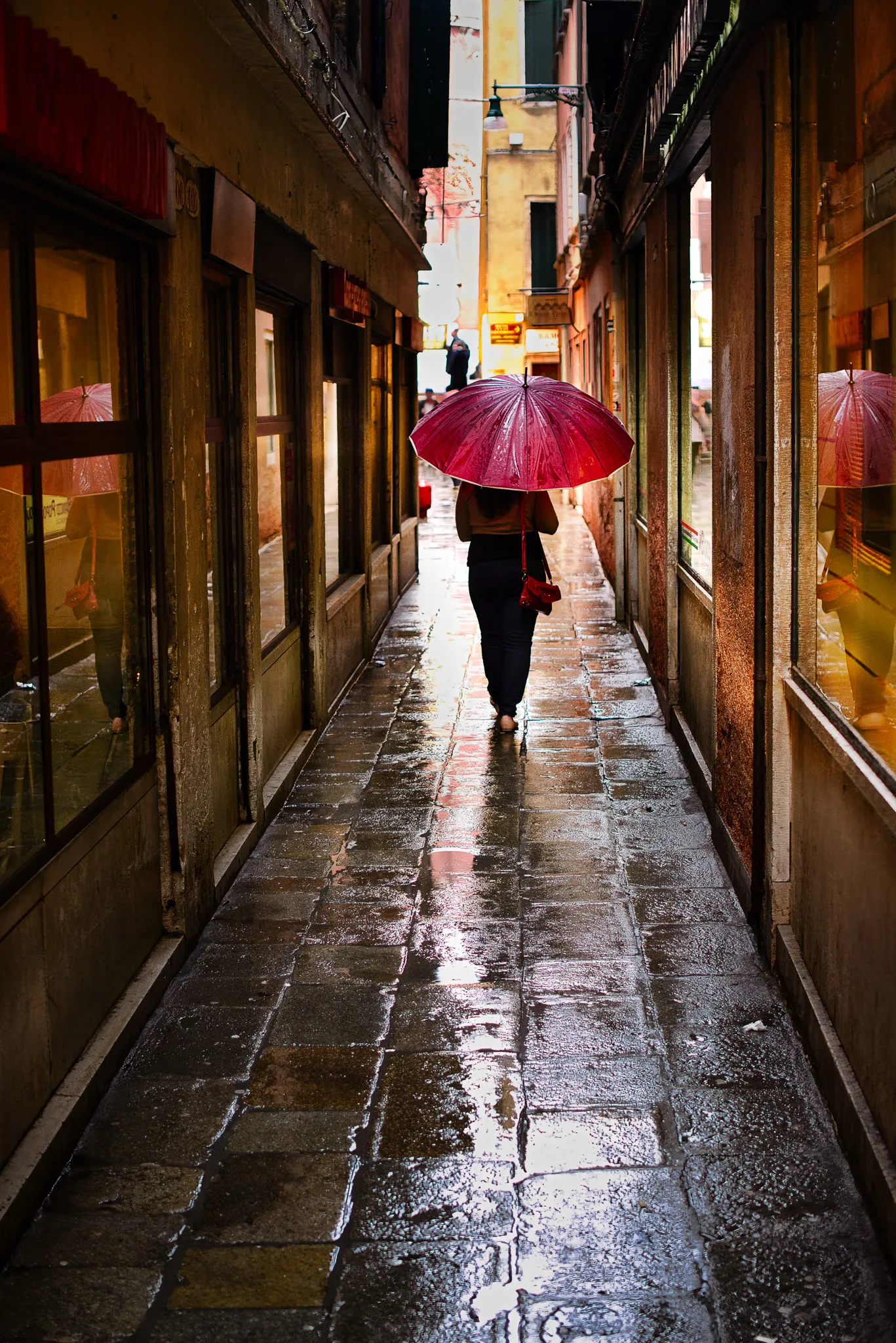
A woman crossed the alley ahead of me. Red umbrella, catching the lamplight for a second before she turned the corner and was gone. That's what made me stop. Properly stop, not just pause, and actually look at what the rain was doing to everything around me.
It empties fast, Venice, when it rains. Within twenty minutes of the first drops the bridges were clear. Even the sound changed, voices and rolling suitcase wheels giving way to water on stone and the odd boat engine somewhere off on the canals. I don't think I've had the city that completely to myself, before or since.
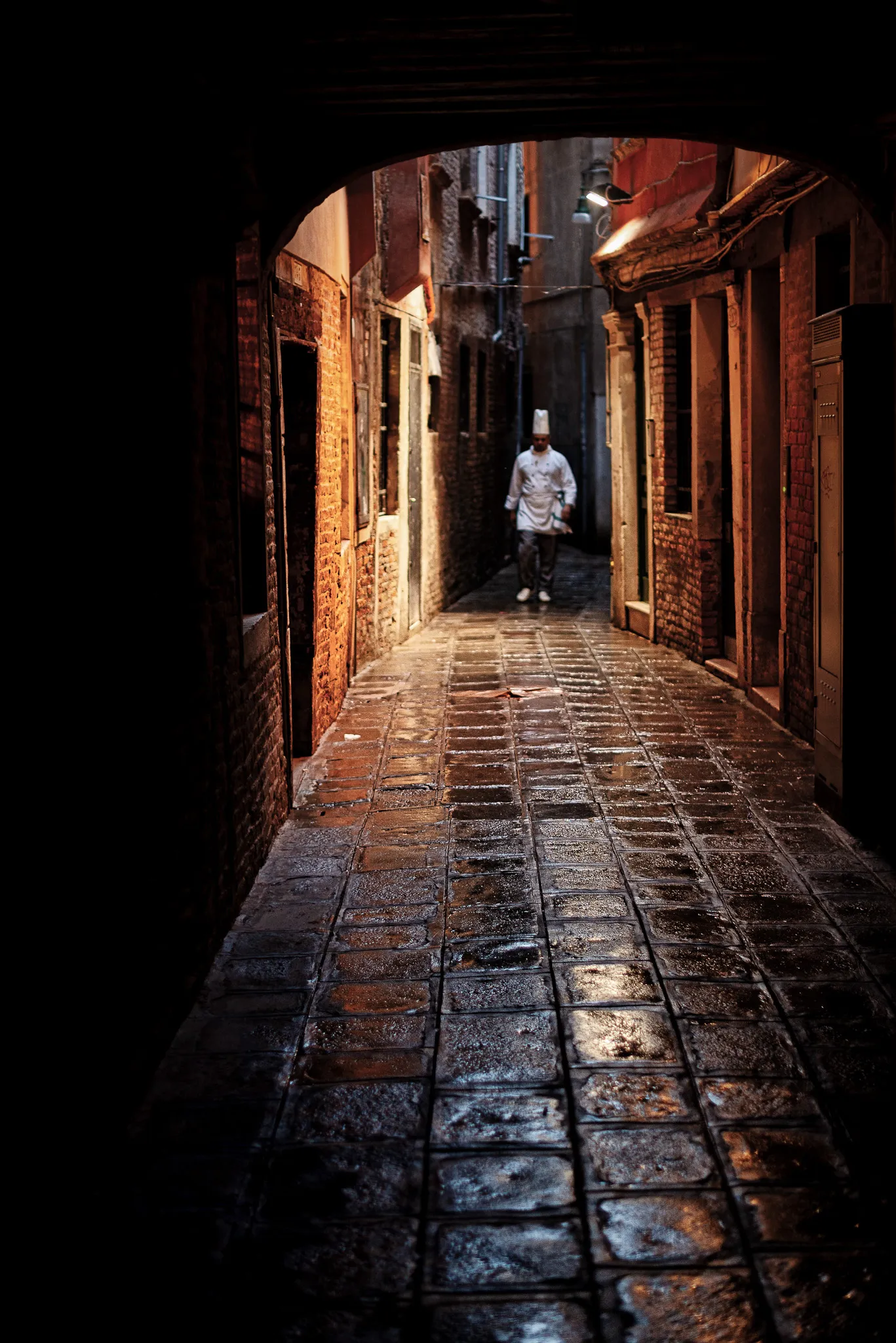
The calli, the narrow stone corridors that thread between the canals, turn into something else entirely in the rain. Walls five floors high on either side, old and wet, funnelling the smell of it down to street level. Where there'd been crowds an hour before, there was just water finding drains, and me, standing in the middle of it, in no hurry to be anywhere else.
And the reflections.
Every lamp post doubled in the cobblestones. Every lit window, every warm doorway glow, every lantern along the canal, all of it mirrored underfoot, running long and a little warped the way reflections do when the surface isn't quite flat. I crouched low, lower than felt dignified in a public street, because the lower you get the longer the reflections run and the more the frame fills with light instead of stone.
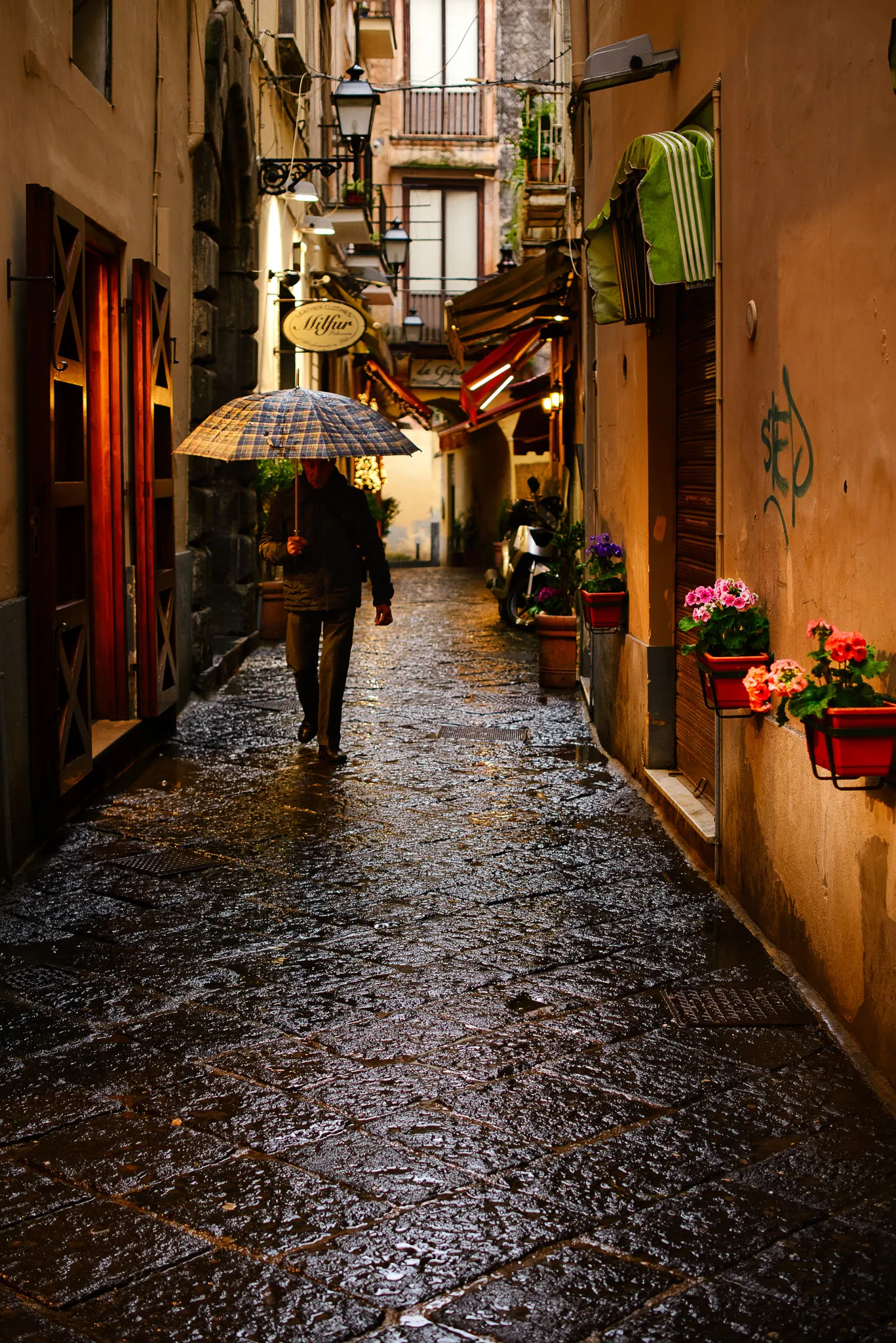
There's a quality to Venice at night the city seems built for. Warm tungsten against pale stone, shallow water catching whatever the sky's doing and rearranging it slightly. In the rain all of that doubles over on itself. It stopped feeling like a photograph of a place and started feeling like a study in what light does when it's got nowhere left to go, which is, for me, what fine art landscape photography is actually chasing.
I hadn't planned any of this. I'd planned dinner, and an early night.
I was still crouched over the cobblestones, knees soaked through, when the alley lit up again. The red umbrella, coming back the other way.
I got back to the hotel late. Gear wet, shoes through completely. My wife asked where I'd been. I showed her the photographs on the back of the camera. She was in two of them. She hadn't known.