The art of golden hour photography
There was an evening on the Kerala coast I'd been building towards since the afternoon.
I'd arrived hours before I needed to. The light was flat, harsh, the kind that makes everything look ordinary. That wasn't the point yet, though. I walked the shoreline, watched the fishermen, noted where the boats sat, where the nets were laid, how the beach curved. I checked where the sun would drop. Picked a spot, set the tripod, waited.
Golden hour photography isn't really about the golden hour. It's about everything before it. The recce, the waiting, the moment you realise you're either ready or you aren't.
That evening, I was ready. Being prepared is probably the single most useful landscape photography tip I can offer anyone shooting in India.
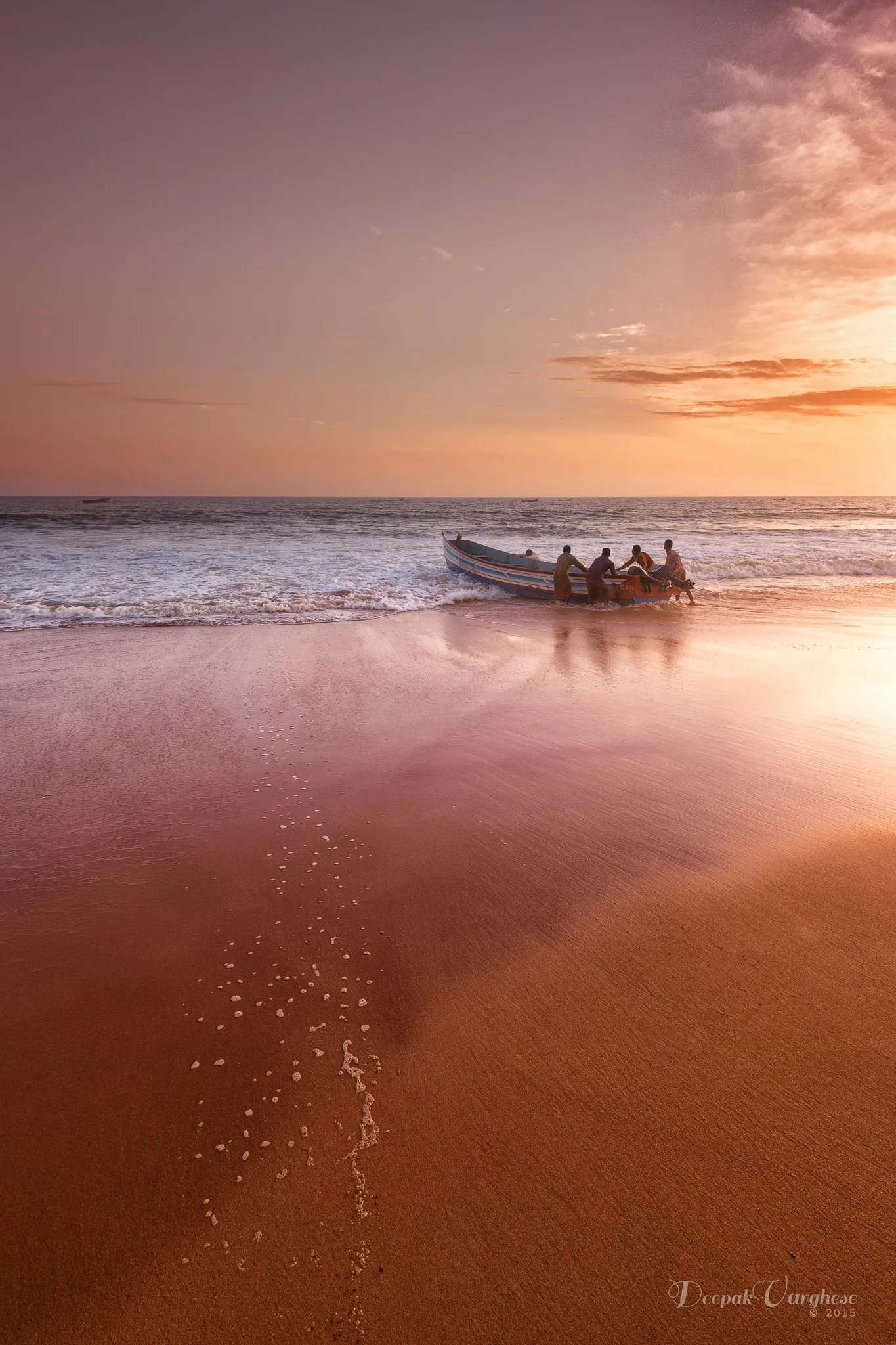
As the sun dropped, the fishermen started pushing their boat down the beach towards the water. Four of them, silhouetted against a sky going from flat blue to amber faster than I expected. I didn't ask them to stop or rearrange anything. I just pressed the shutter and let it be what it was. Wet sand catching the last warmth of the day. People doing what they'd done at this hour for generations. Light raking across the beach at an angle that made everything feel sculpted.
It's one of my favourite frames I've ever made, and it exists because I spent an afternoon understanding a place before the light made it beautiful.
Arrive embarrassingly early
Arrive embarrassingly early. While the sky's doing nothing, use that time to find your foreground, test compositions, lock your settings in. Because when the light finally arrives, it moves fast. If you're still fumbling with a tripod leg when the sky ignites, you've already missed it.
Look down, not just up
I was in Nubra Valley once, at around 10,000 feet, the kind of landscape that makes you feel small and lucky in the same breath. The Karakoram peaks were behind me, enormous, snow-capped, obviously the thing I was supposed to be photographing. But it was the dunes in front that I kept coming back to. Wind had carved lines into the sand all day, and at golden hour those lines caught the low light and turned into texture, shadow, pattern. The foreground stopped being a foreground. It became the whole story.
Get low. Go wide. Let what's in front of you lead the eye back to what's behind.
Expose for the highlights
Your camera looks at a bright sky over a dark foreground and gets confused. Let it decide the exposure and you'll blow the sky, lose the ground, or more likely both. Shoot manual. Protect the highlights. Bracket if the range's brutal. I carry a 2-3 stop GND for balancing foreground against sky, since it's the most honest way to handle a scene that refuses to cooperate with itself. You can recover shadows later. You can't recover a sky that's burned white.
And don't leave it on auto white balance. It'll quietly wash out the exact warmth you woke up early for. Set it manually, somewhere around 5500 to 6000K, and let the oranges sit where they belong.
Don't pack up when the sun drops
I nearly made that mistake in Venice, standing on the Rialto Bridge as the sun went behind the roofline. The Grand Canal had been beautiful all evening, but once the direct light went, I assumed the show was over and started loosening the tripod. Then the sky caught fire.
The afterglow. Clouds that had sat grey and irrelevant for hours suddenly lit from underneath, deep crimson bleeding into lavender at the edges. Five minutes, maybe, and the best light I saw on that whole trip.
Stay put. Keep shooting. The ten minutes after sunset are often better than the hour before it.
Use a tripod, and scout ahead of time
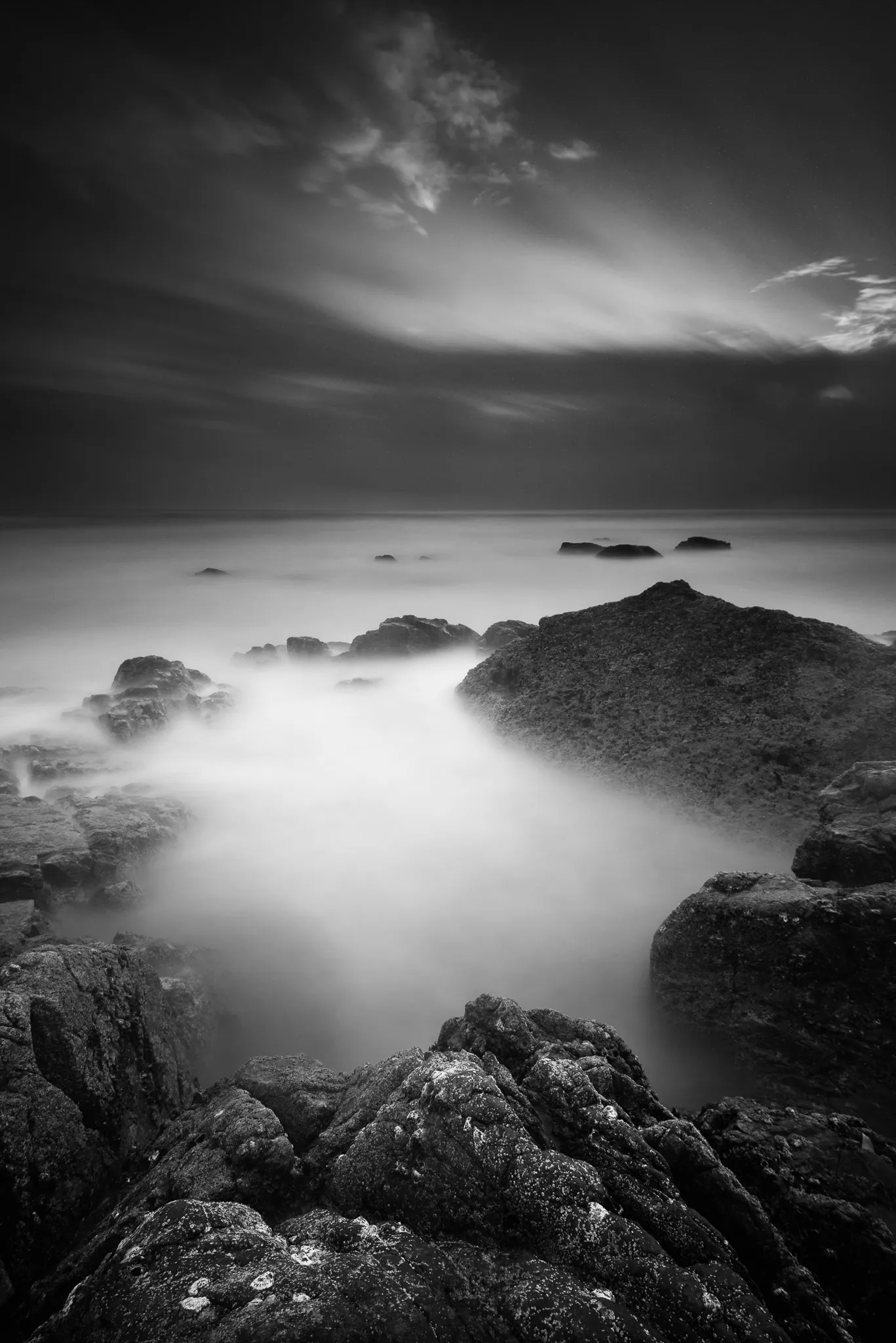
As the light fades your shutter speed drops, and a tripod keeps things clean even as it gets dark. It's what makes the long exposures possible, the ones that turn breaking waves into silk. Hand-hold as golden hour ends and you're leaving the best shots on the table.
Scout a different day if you can. My best golden hour frames were planned, not stumbled into. I use PhotoPills before travelling anywhere new, mostly so I know where the sun will actually be relative to whatever I'm shooting. Knowing that before you arrive is worth more than any piece of gear.
These are the landscape photography tips that have shaped how I shoot across India, from the Kerala coast to the high deserts of Ladakh. That Kerala afternoon cost me three hours of flat, boring light. The frame I went home with is still the one I'd keep if I could only keep one.
Prints from the Kerala coast and Nubra Valley series are available in the shop.