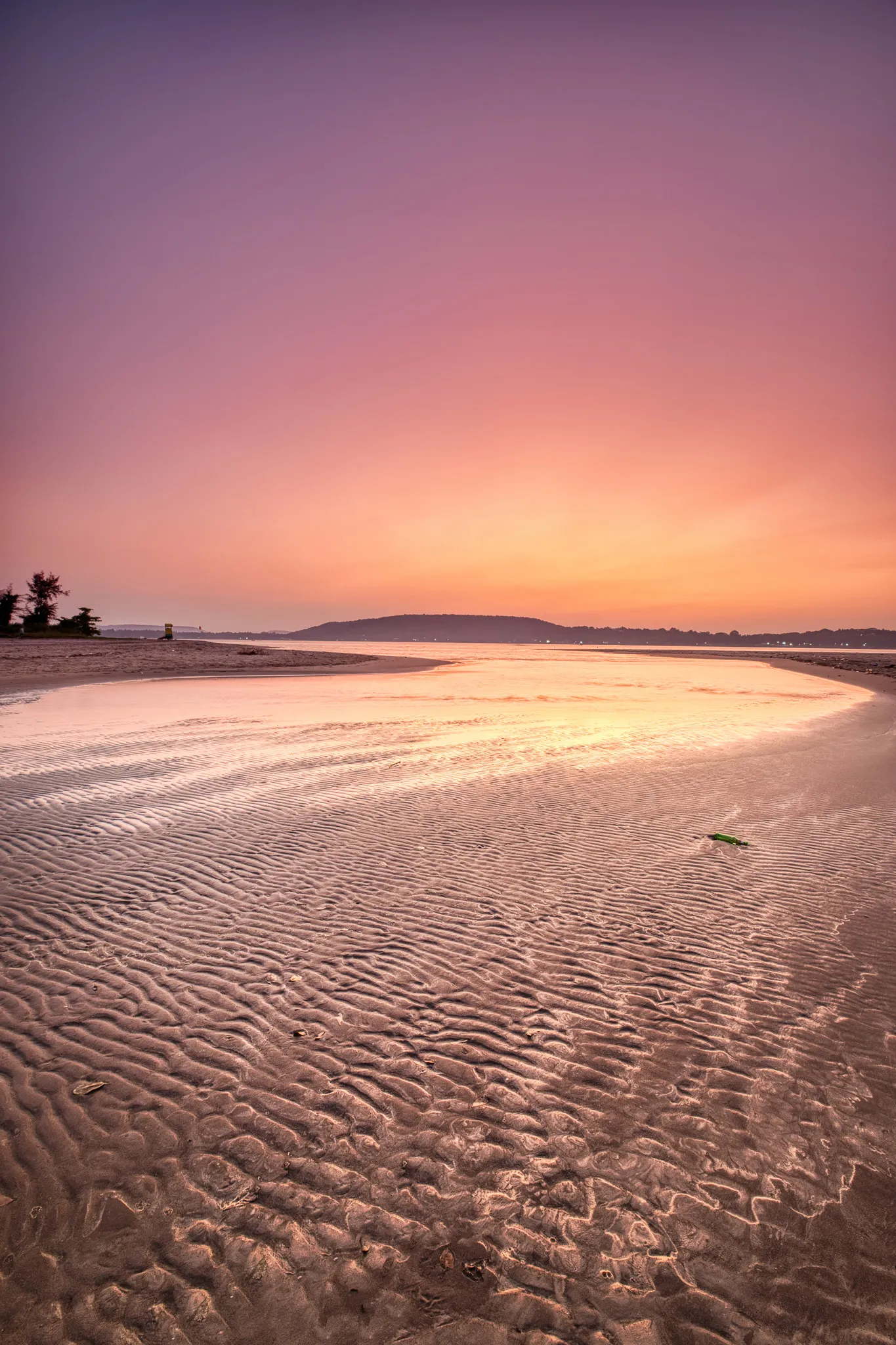
The invisible architecture
I used to circle a scene the way you circle something you don't fully trust yet. Moving around it, crouching, stepping left, stepping right, looking without the camera first. In my head this was always the stalking phase, the minutes before I'd commit to anything.
What I was doing, without having the words for it, was reading the frame. Looking for the bones underneath. The thing that would hold the image together once everything else was in motion.
You don't point at the skeleton the way you'd point at colour, or light, or a face in a crowd. But you feel it when it's there. The eye moves through the image without being told where to go. Something's holding it together and you can't quite say what.
You feel it missing too. The photograph sits wrong, restless, flat in a way that has nothing to do with the light. The subject's interesting, the moment's real, and still it won't land. Composition problem. The bones aren't where they should be.
I spent years without the language for any of this. I just knew when a frame felt right and when it didn't.
Composition isn't a checklist. It's more like a vocabulary. You learn the words so you can eventually stop thinking about them and the sentences just come out.
Here are the ones I keep coming back to.
Foreground interest
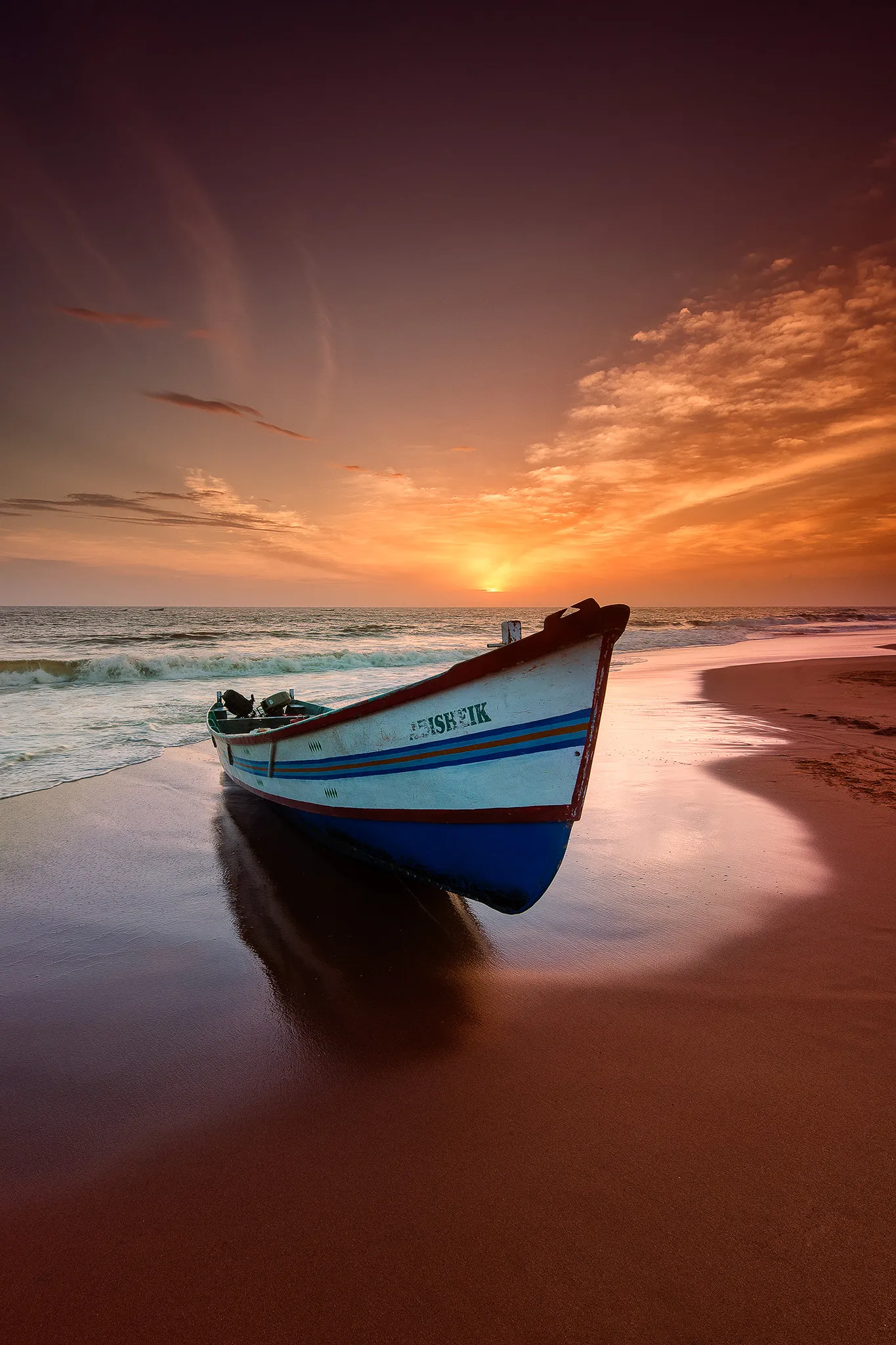
The boat wasn't the plan.
I'd gone to the beach for the sunset and was scanning the horizon when I nearly walked into it. A fishing boat, dragged up onto wet sand, blue hull, white gunwale, sitting there like it had been left for me.
I got low, closer than felt entirely comfortable, close enough that the bow filled the bottom of the frame. Then I waited for the light.
Foreground interest isn't just putting something in front of your subject. It's giving the eye somewhere to land before it travels further into the frame. That boat gave it a beginning. The sun dropping into the sea gave it an end.
Symmetry and reflections
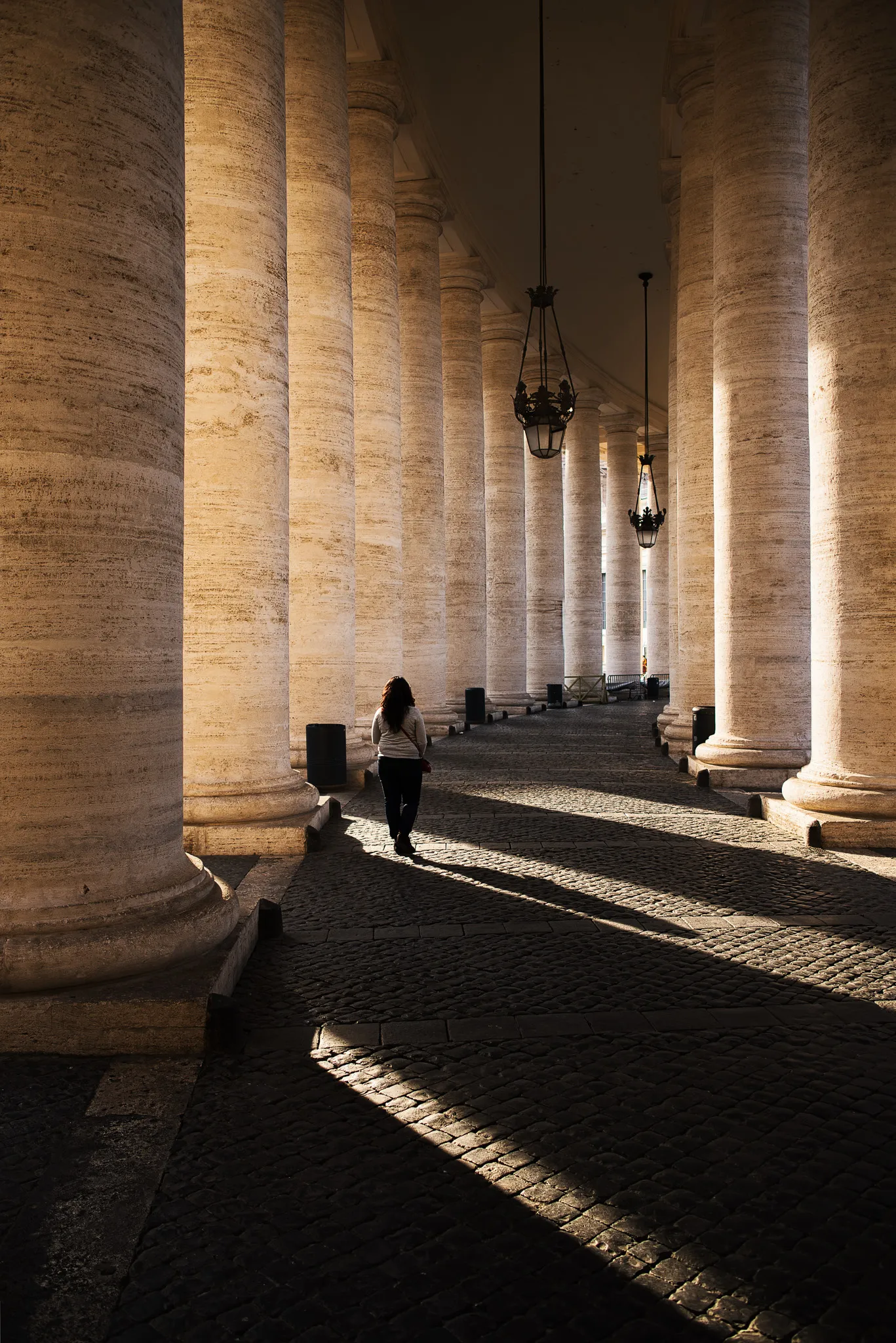
It was late afternoon in Rome, St. Peter's Square full of people, tour groups moving through in waves. I'd been waiting for one gap, one clear second with nobody in the frame but her, and it came. The light was coming in low and angular, catching the stone columns and throwing long shadows across the cobbles.
I wasn't thinking about symmetry when I raised the camera. I was thinking about my wife, walking ahead of me through the corridor of columns, small against all that stone.
But looking at the frame afterward, I saw what the columns were doing. Repeating, each one a version of the last, receding into the distance in a rhythm the eye wants to follow. Then the shadows, striping the ground beneath her feet.
Symmetry works because of the pleasure the eye takes in pattern. The columns alone would be a decent architectural study. She breaks the pattern, and that's where the photograph actually lives.
The rule of thirds
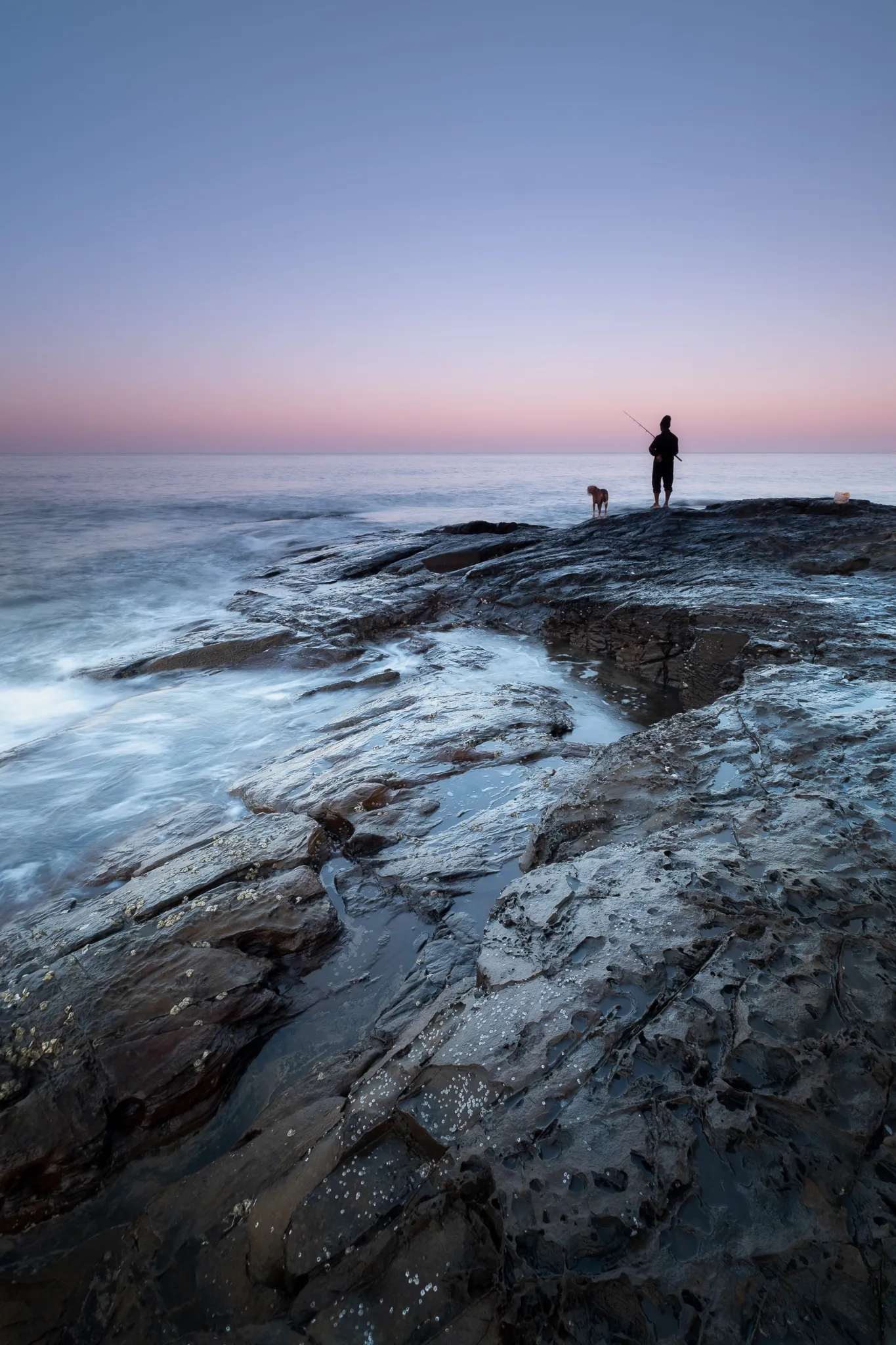
I'd been sitting on the rocks at Anjuna for twenty minutes before I even noticed them. A fisherman and his dog, out at the edge where the basalt met the sea. The sky had gone from rose to slate blue, that gradient right after sunset that doesn't really have a name.
I let them sit at the upper right, roughly where the thirds intersect, the rocks filling the lower half, the sky stretched wide above. Not a decision I made consciously, but it's there in the frame regardless.
A subject dead centre makes a statement. The same subject off to one side leaves room for the viewer to enter the frame rather than just look at it. Two small figures at the edge of everything. The mathematics of it was the last thing on my mind at the time.
Negative space
Venice from height is a different city.
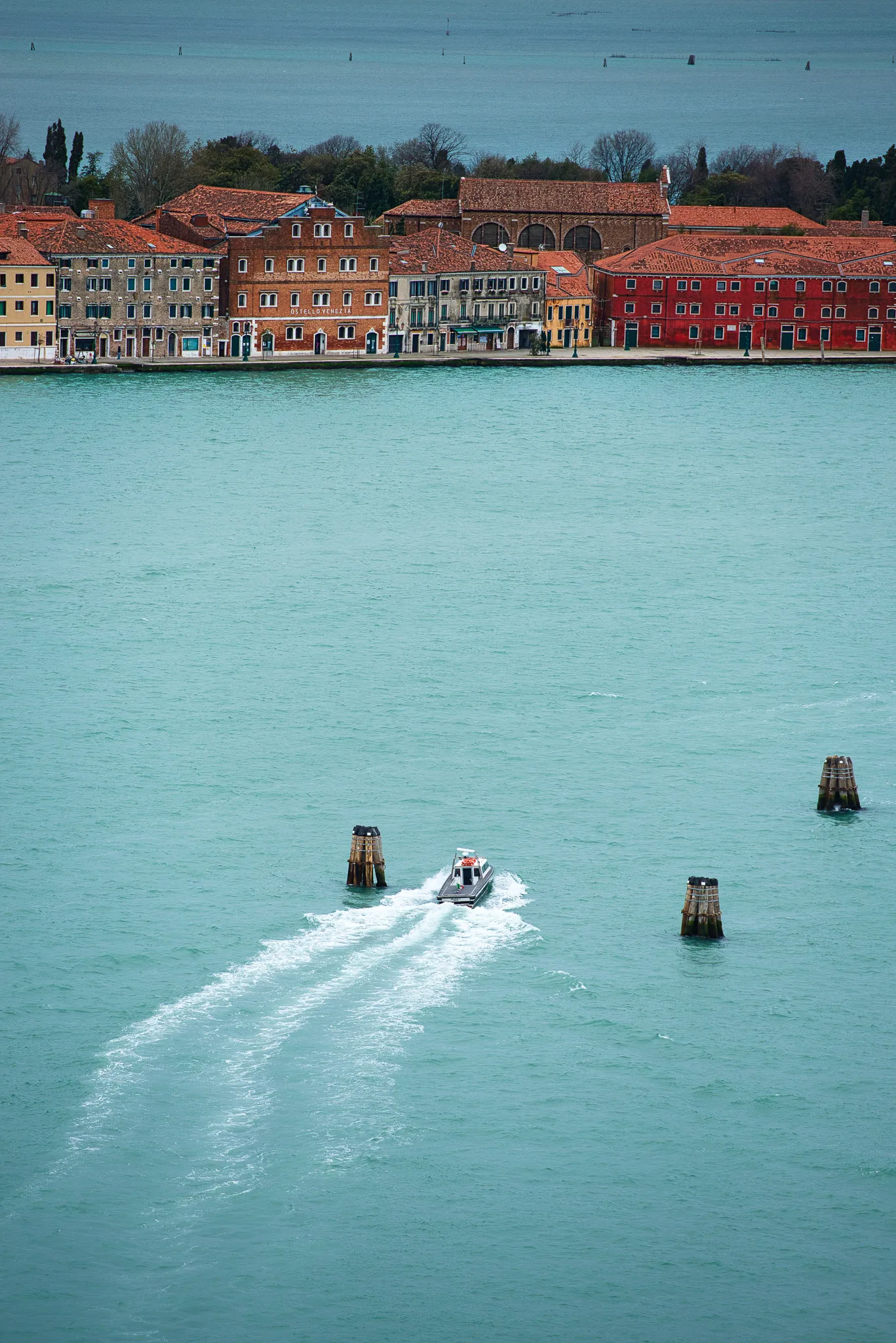
I was up on a campanile in the lagoon district when I saw it: one motorboat cutting across a huge stretch of water, headed somewhere in a hurry. The lagoon was a turquoise you get here and almost nowhere else.
I held back, let the water breathe, let the boat stay small.
Negative space is really the art of restraint. That stretch of turquoise isn't empty, it's doing work. It pushes the boat into significance. Remove the water and you've got a boat and some buildings. Keep it and the photograph turns into something about scale, about how small we are in the gaps between things.
Learning to leave a frame alone takes longer than learning to fill it.
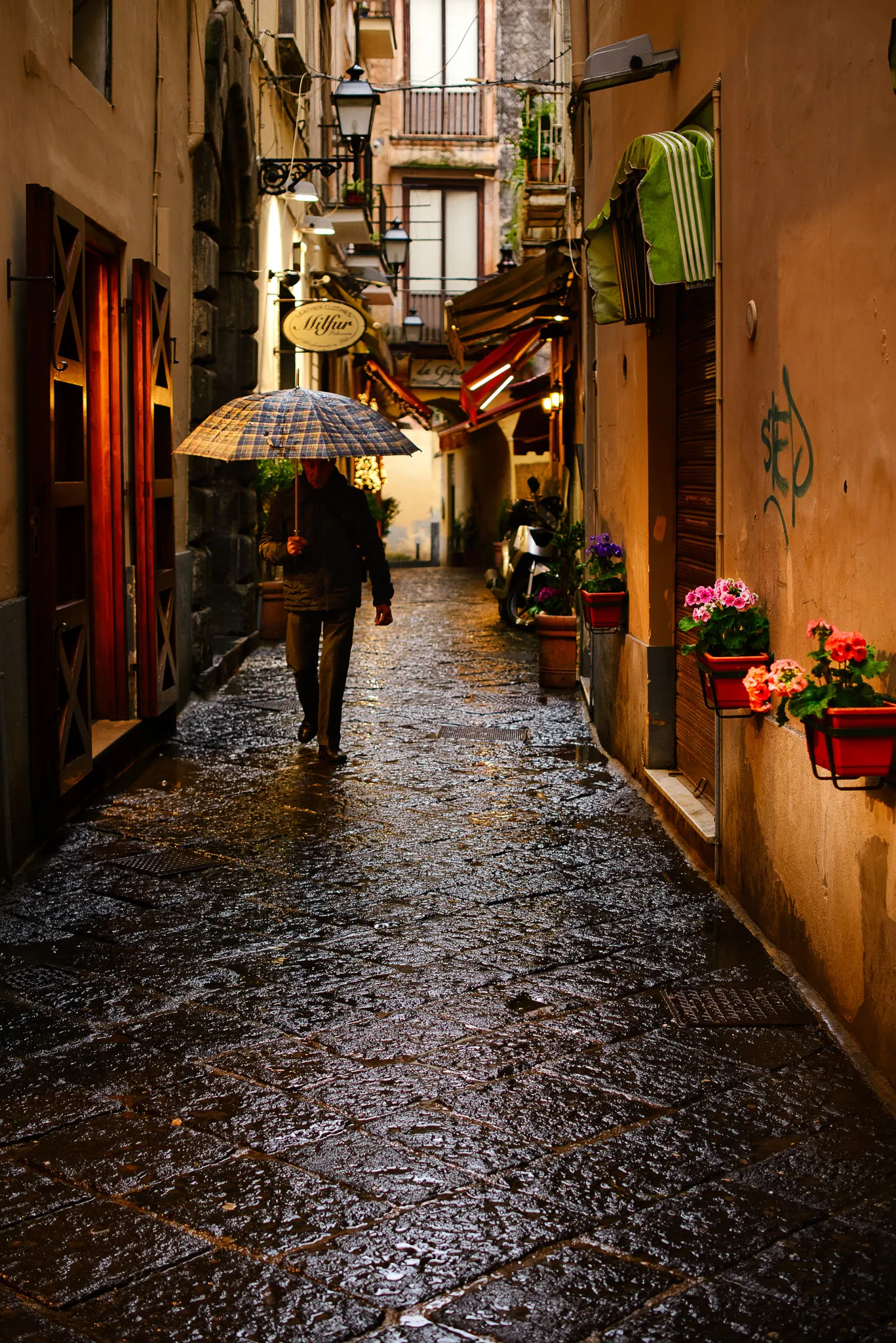
Leading lines
I'd walked through this alley before without really seeing it.
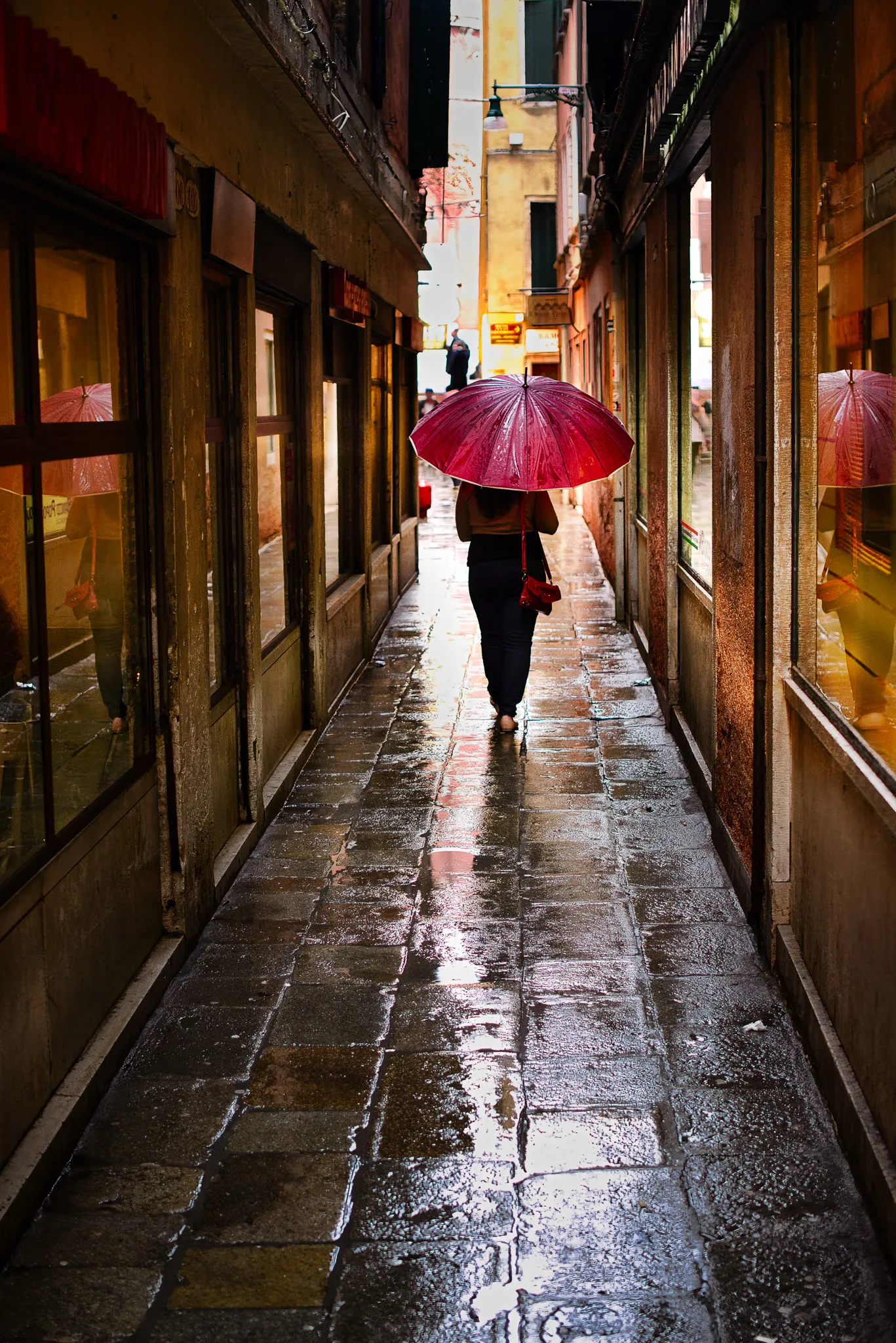
That afternoon it was raining, my wife was ahead of me with her red umbrella, and the wet cobblestones had turned the lane into a long dark mirror. The buildings ran parallel on either side and then converged with the perspective. Everything in the frame pointed at her.
Leading lines work because the eye doesn't choose to follow them, it just does. When those lines lead somewhere worth arriving at, the viewer's made a journey without moving.
She had no idea I was behind her. She was just trying to stay dry.
Composition is the last thing I think about while shooting and the first thing I see when editing. In the moment it's instinct. Afterwards, at the desk, with the light long gone, you can finally see the skeleton.
Prints from Shankhumugham beach, Venice, Goa and Rome are available in the shop.